

.jpg)




TOOTHBRUSH EMBROIDERED PATCHES
56 Sold 4.5
Description:
as "Toothbrush Embroidery"Also known as Raised Stitch Embroidery or Flock Embroidery, it is a special type of computerized embroidery that makes embroidery threads stand vertically with a dense raised velvet texture.. It gets its name from its resemblance to toothbrush bristles, featuring outstandin...
as "Toothbrush Embroidery"
Also known as Raised Stitch Embroidery or Flock Embroidery, it is a special type of computerized embroidery that makes embroidery threads stand vertically with a dense raised velvet texture.. It gets its name from its resemblance to toothbrush bristles, featuring outstanding three-dimensional effect and soft tactile feeling.
1. Process Principle (Core)
- Padding Embroidery: Lay a layer of removable auxiliary material such as EVA, foam or film on the fabric first.
- Dense Stitch Embroidery: Adopt high-density and short-stitch spacing repeated embroidery on the padding with a computerized embroidery machine to fix threads firmly on the auxiliary material.
- Cutting Velvet & Removing Padding: After embroidery, cut the threads evenly along the surface of the padding with a special cutter, then tear off the padding. The threads stand naturally to form neat bristle-like piles.
- Finishing Process: Combing, shaping and removing loose lint to enhance fastness and hand feel.
2. Two Production Methods
Reverse Side Toothbrush Embroidery (Better Stereo Shape)
- Embroider on the reverse side of fabric → cut velvet → flip to the front side. The velvet stands neat and not easy to collapse, suitable for pure toothbrush embroidery patterns.
- Front Side Toothbrush Embroidery (More Flexible)
Directly embroider and cut velvet on the front side. It can be combined with flat embroidery and appliqué embroidery for richer patterns, which is the mainstream production method.
3. Product Features
- Strong 3D Effect: 3D raised pile with thickness of 1–3mm, far more three-dimensional than ordinary flat embroidery.
- Soft Hand Feel: Dense plush surface, fluffy, skin-friendly and non-irritating.
- Unique Texture: Similar to short dense velvet or carpet texture, high-grade and elegant.
- Rich Color Performance: Supports multi-color gradient and mixed color with strong covering power.
- Higher Cost: 2–5 times more expensive than ordinary flat embroidery, due to high thread consumption, long working hours and higher defective rate.


Patch & Emblem Processes – Comparison Guide

How They Are Made:
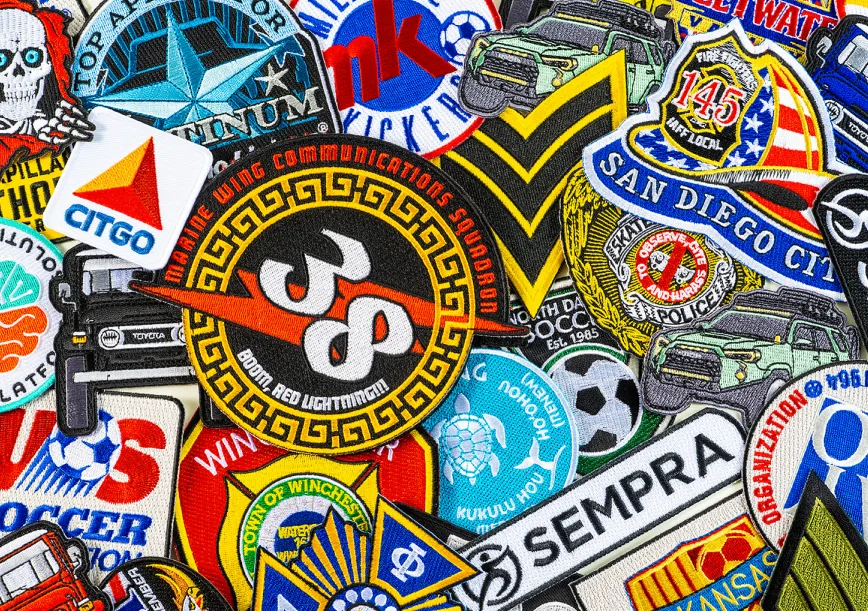
Produced from soft polyvinyl chloride (PVC) or rubber, poured or injected into custom steel molds. Multiple colors can be layered, and raised/3D details can be achieved with precision.
Uses:
Durable and waterproof, ideal for outdoor gear, uniforms, tactical/military use, sports, and lifestyle branding where long-lasting, flexible logos are needed.
How They Are Made:
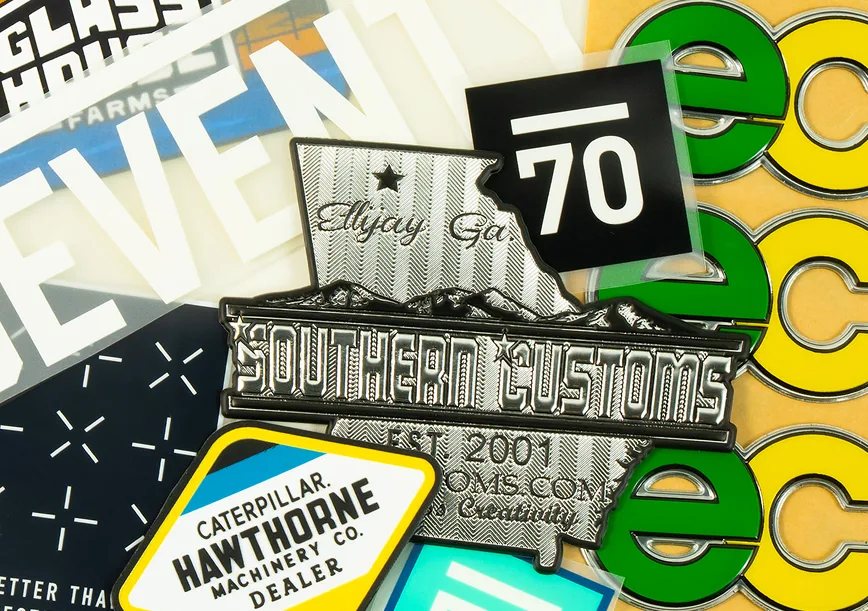
Standard embroidered patches stitched with thread, then precisely cut using laser technology for sharp, clean edges. This allows custom shapes beyond traditional round/square cuts.
Uses:
Apparel branding, uniforms, event merch, and high-detail designs where embroidery texture and durability are desired with a modern edge finish.
How They Are Made:
Molded from silicone or thermoplastic polyurethane (TPU). Similar to PVC but softer (silicone) or more rigid and abrasion-resistant (TPU). Often allows semi-transparent or glossy effects.
Uses:
Premium athletic wear, outdoor gear, technical jackets, footwear, hats, and luxury branding—used when a high-end, “tech” look is required.

How They Are Made:
Made on a loom using tightly woven threads, rather than stitched embroidery. This achieves very fine detail and small lettering that embroidery can’t match.
Uses:
Best for intricate logos, small patches, and fashion branding where detail and a flatter surface are more important than texture.

How They Are Made:
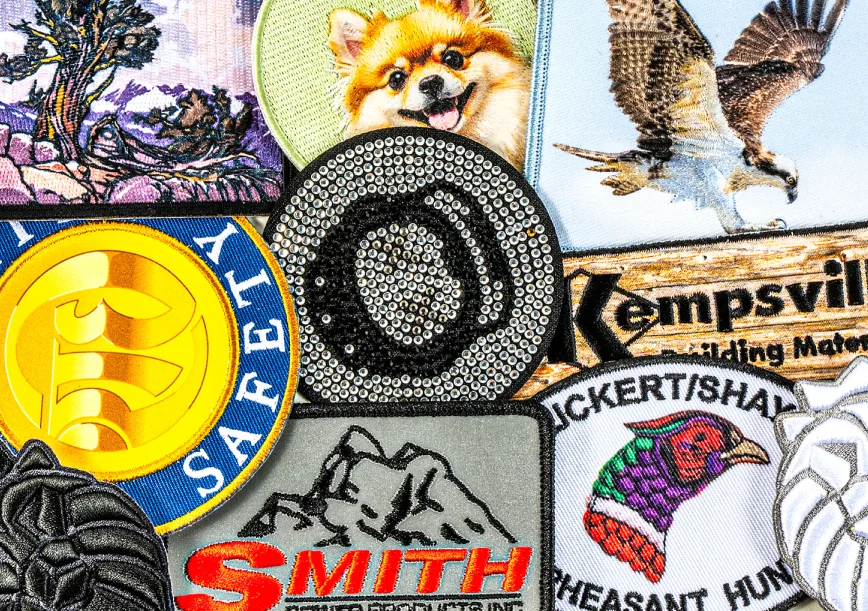
Designs are digitally printed onto polyester twill using dye sublimation, where heat and pressure embed the ink into the fibers. Edges can be finished with stitching or laser cut.
Uses:
Full-color designs, gradients, photographic images, complex logos. Popular for sports teams, event giveaways, and promotional patches.
How They Are Made:
Constructed with reflective materials (glass bead or prism layers) or glow-in-the-dark (phosphorescent/fluorescent threads, inks, or PVC). Can be embroidered, woven, or PVC-based.
Uses:
Safety gear, outdoor wear, cycling/running apparel, uniforms, tactical/military, or nightlife branding where visibility and novelty are key.

How They Are Made:
Created using die-cast, die-struck, or etched metal, often with plating (nickel, silver, gold) and enamel filling. Molded or stamped for detail, polished for finish.
Uses:
Lapel pins, hat emblems, luxury product branding, keychains, police/firefighter badges, and commemorative items.

How They Are Made:
Produced with chenille yarns tufted into a felt base, creating a fuzzy, carpet-like texture. Often combined with embroidery for outlines and lettering.
Uses:
Classic varsity jackets, sports teams, collegiate branding, retro fashion. Highly tactile and bold.
How They Are Made:
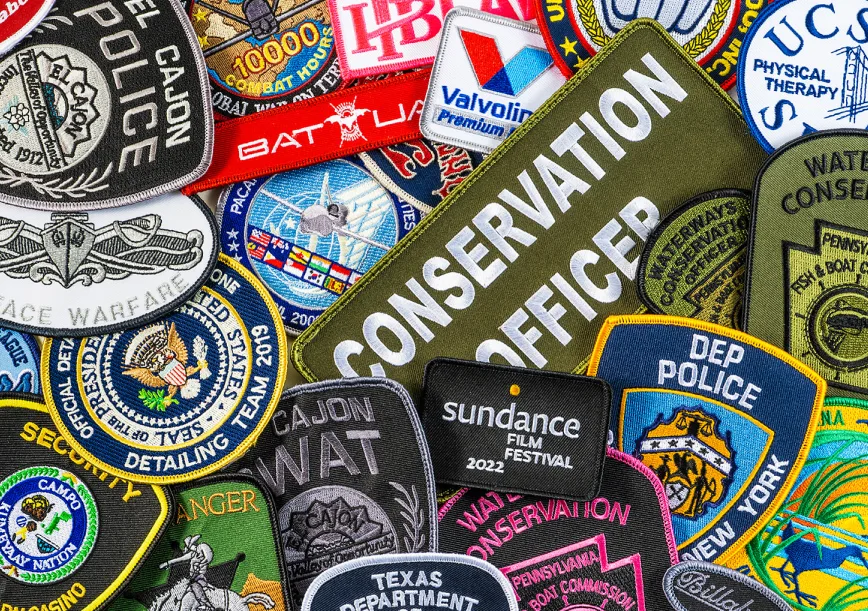
A thick stitched border (done with a Merrow machine) wraps around the edge of a patch. Provides a sealed edge, prevents fraying, and creates a rounded finish.
Uses:
Traditional patches (round, square, shield shapes). Common for scout patches, biker patches, and collectible/emblematic uses. Less common for complex shapes where laser cutting is preferred.
Quick Comparison Table

